patching...
Welcome back, Patch Blogger!

Plymouth-Canton Parents, Teachers State Cases in Book Challenge

Panel's recommendation on book could come to superintendent by next week.


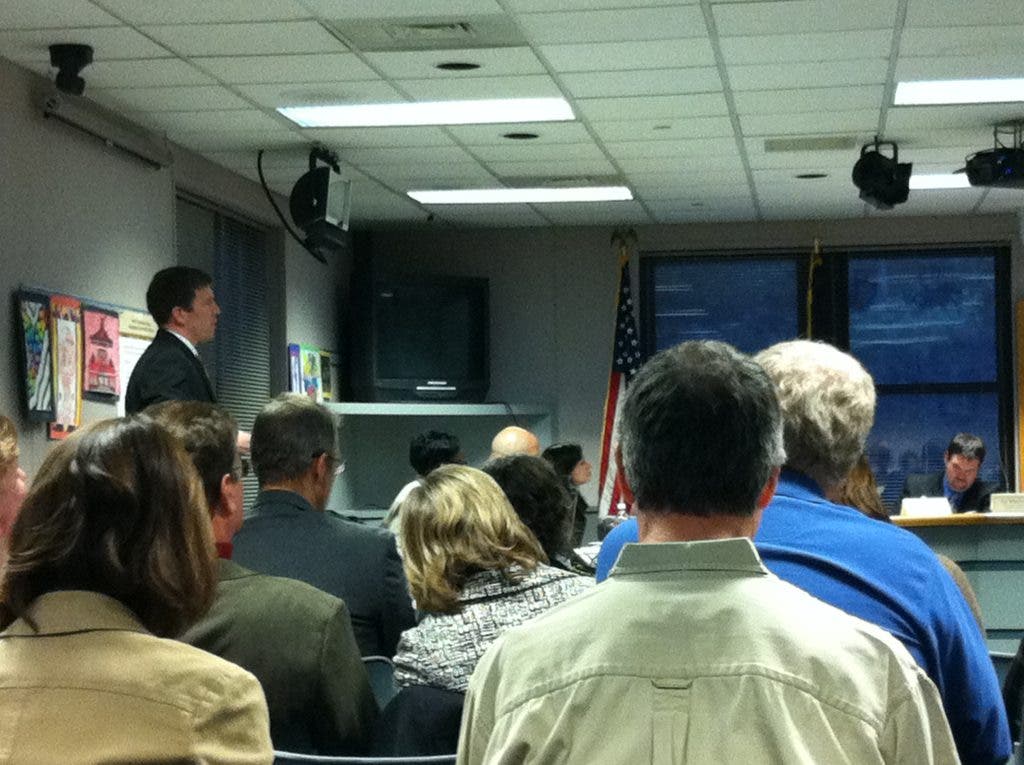
Two Salem High School parents who challenged the assignment of Toni Morrison's award-winning novel Beloved in an AP English course and the teachers who assigned the book each defended their stances Wednesday during a review of the book.

Beloved, along with Graham Swift's Waterland, both have been challenged by the parents of an AP English Literature student. Superintendent Jeremy Hughes initially removed Waterland from the class curriculum upon the parents' complaint, but that book will be subject to its own review at a later date.

The two-hour public review was the first formal hearing on the book and it will be followed by a subsequent closed meeting sometime next week — district officials say a date has not yet been determined — where a vote will be expected. Based on that vote, a recommendation will be handed up to superintendent Jeremy Hughes, who then will make a decision.

The parties met at the E.J. McClendon Educational Center in Plymouth for the review, which was attended by more than 60 parents and students. Matt and Barb Dame, the parents who challenged the books, first spoke to a panel assembled by the district, which included high school teachers, a school media specialist, a community library director, parents from the district's parent council, a college professor and administrators. 

Just one day earlier, more than 100 parents and students filed into the same room to speak about the issue.

Barb Dame argued that Beloved was a fictitious account set upon its real-life backdrop of slavery, and contained gratuituous language, violence and sex acts that provide no historical context for the reader.

She also argued the book was given an 870 Lexile rating, which rates the complexity of the language within a work. A Lexile score of 870 equates to about a fifth-grade reading level. She compared its Lexile rating to Roald Dahl's James and the Giant Peach.

"Mature, right?" Barb Dame said.

Matt Dame addressed what he characterized as gratuitous sex and violence in the book.

"In the first two chapters, there are five references to sex with cows and other sex," he said.

Additionally, Matt Dame said, the book contains passages containing sex with ghosts, forced oral sex and infanticide.

"I don't see the value of this novel in the school curriculum," Barb Dame said. "I just don't see it."

Matt Dame also criticized repeated instances throughout the novel where he said God's name was used in vain.

"If any of this was offensive to Allah or Hindus it would never be in our school district," he said.

As an alternative, the Dames said their daughter was assigned William Faulkner's As I Lay Dying — which also scored an 870 on the Lexile chart and was banned by a school board in Kentucky in 1986 — by her teacher. They said she has to read it in the library and there are no class-wide discussions about her assigned reading.

Brian Read, an AP English teacher who teaches both Beloved and Waterland, admitted he did not have alternative reading material set aside.

"I've taught Beloved for 10 years, never had it challenged," he said.

Still, he said, he understands the parents' position.

"I believe they are looking out for the best interests of their child," he said. "As a parent myself, I understand that."

He said there was a process to vet the book a decade ago when he first introduced it to his syllabus.

"I proposed it to my administrator," he said. "She read that and Waterland. We read them, discussed the content and theme and how it fit in with the course."

He said during that process it was acknowledged that there was some mature content in the books, "but we decided the themes and the way it fit into the course was justified."

He said a list of reading material went out to parents in the spring, before the summer reading program began.

He also countered the Dames' argument that a nonfiction text about slavery or survival should have been assigned.

"AP English Literature, it's about fiction," he said. "Poetry and fiction."

Another course — AP English Language — is about nonfiction, he said.

He said the themes in Beloved, which tells the story of the ghost of a deceased child apparently coming back to visit her mother, feature "magical realism," where the very fantastical can be mundane, and the book has several instances of symbolism.

Gretchen Miller, another AP English teacher, said the book meets the standards of the community the school is serving.

"We teach this book to a self-selected group of people who — with parents — determine they're old enough," she said.

After each side spoke, the panel retreated into a closed meeting to discuss the arguments. A decision on Beloved could come as early as next week, MacGregor said, after the panel convenes again.

Follow updates to this story as they develop here on Plymouth and Canton Patch. Be sure to follow @PlymouthPatch and @CantonPatch for breaking news updates.

  • Should the novels "Waterland" and "Beloved" be kept in or dropped from Plymouth-Canton Salem High School's AP English Program?

    (Voting has been closed for this question)
    • Both should be kept.
        7967 (85%)
    • Keep "Waterland;" drop 'Beloved."
        18 (0%)
    • Keep "Beloved;" drop "Waterland."
        19 (0%)
    • Both should be dropped.
        1315 (14%)
    Total votes: 9319
  • This is not a scientific poll. View Results Vote!
Related Topics: Beloved, PCEP, Waterland, book banning, and pccs

Sean Zayas

4:27 pm on Thursday, January 12, 2012

I'm not necessarily for pulling controversial books out of school libraries or even having them assigned in class. I think, though, that where language is raw, and there's gratuitous sex and violence, a book is likely not to be the best choice for students. You can't tell me there aren't thousands of better books than Beloved and Waterland that our students could read.

For me, this is not entirely a censorship issue. Some salty language and violence works. Heck, much of the Old Testament would get an R rating if you put it on the big screen. But, we send mix signals in school when we make this type of thing a free speech issue. If it's not OK for kids to wear obscenities on their clothing, or speak obscenities in the hallways, while at school, why is it wrong to say they should not be reading such material at school?

Ultimately the policy should be that where the book is controversial, the parents get to make the call as to whether their child reads and writes about it or whether the child can opt to cover other material.

Reply
Comment_arrow

Jeff Longe

1:01 pm on Friday, January 13, 2012

For clarification, and this came out in the public portion of the review committee meeting on Wednesday, the child of the parents challenging these materials has been permitted to cover other material in place of "Beloved".

Comment_arrow

Heide Leskun

6:22 am on Sunday, January 15, 2012

Just so you know, regarding the comment about parents getting to make the call about the books, The parents were given the list of books in May, so parents could make the decisions, and as one parent of an AP student stated, "It is the parents obligation to look at the books and find out why they are listed as controversial. The time to question the book is before the class starts in September and not when they start reading the book."

Morgan Byrd

10:06 pm on Thursday, January 12, 2012

I have to ask, have you actually read these books? Context is extremely important when making a statement like that.

Having been through the course I can say that both selections are impeccably well-suited for teaching literary criticism. Moreover, mature themes are important - if students are going to study literary criticism (which they should) they should also be able to confront violence and sexuality. Admission to the course is contingent upon review of a writing submission and the recommendation of an English teacher, and is only open to Juniors and Seniors; these students are not children, they are intelligent young adults who have been selected for their maturity and literary prowess. Sexuality and violence are important parts of the human condition - rape, murder, and other such awful things are much more common than we would like to believe. These novels do not glorify them (quite the contrary); they examine their very real impacts on fictional characters. Just because we find topics uncomfortable or distasteful doesn't mean that we can ignore them and the role they play in the lives of very real people and great literature derived from these experiences.

Reply
Comment_arrow

Mike

12:41 am on Friday, January 13, 2012

Morgan, I must say that you have the most compelling statements that these books should be kept. Too bad none of the Educators could do this well.

Thank You

Comment_arrow

H. Kosnovsky

6:53 pm on Monday, January 16, 2012

@Mike - educators have indeed been making compelling arguments, they're just too busy to be hanging around blogs like this one. Un-tenured teachers also tend to not question their employers' decisions if they want to keep their jobs.

Laura J.

2:29 pm on Friday, January 13, 2012

Regarding the comment about there being "thousands of better books than Beloved and Waterland that our students could read," note that Beloved won a Pulitzer Prize, and in 2006 a New York Times survey of writers and literary critics ranked it as the best work of American fiction of the past 25 years. Waterland was shortlisted for a Booker prize, an extremely prestigious international award for English language fiction.

Reply
Comment_arrow

john clark

6:50 pm on Saturday, January 14, 2012

Give me a break. Obama won the Nobel Peace Prize and his greatest accomplishment will be moving Jimmy Carter from the worst president to the 2nd worst president. Awards don't mean anything.

Comment_arrow

Morgan Byrd

9:32 pm on Saturday, January 14, 2012

Thank you, John Clark, for that wonderful ignoratio elenchi. President Obama's Nobel prize, while it presents a very interesting discussion about foreign policy, has absolutely nothing to do with the Pulitzer and Booker.

Comment_arrow

R

6:17 pm on Monday, January 16, 2012

Morrison also won the Nobel Prize.

Christine M Byrd

6:34 pm on Friday, January 13, 2012

Two disturbingly close-minded people should not have the power to control access to important contemporary literature. A well-read student learns to think, question, and to make decisions based on knowledge. Critical thinking is important. Great literature allows students to reflect on social issues by developing one's world view. Our country needs these well-read, critical-thinking, socially aware students! Please do not allow two uninformed people to ruin an excellent AP Lit class. I know that my son benefited immensely from that class in 2009. Students, speak out!!

Reply
Comment_arrow

Debbie Piotrowski

12:08 pm on Saturday, January 14, 2012

students & parents are speaking out in numbers!! will be interesting to see if the powers that be are listening!!

Sylvia Fulmer

12:19 am on Saturday, January 14, 2012

They did the same thing with Huckleberry Finn, Catcher in the Rye, To Kill a Mockingbird, etc. Kids today read nothing of substance. And they wonder why they don't know anything. Knowledge is power. But gee...if this generation is allowed to obtain knowledge, they won't be so easily duped and controlled. The powers that be can't allow that. Unfortunately, ignorant parents don't help.

Reply
Comment_arrow

Frank Zubek

9:17 am on Tuesday, January 17, 2012

@Sylvia- I agree What amazes me is that at no other time in our history have we had SUCH access to knowledge through libraries,newsprint- media and internet. And yet- a good number of kids seem to just be interested in sticking their noses into those phones to text each other. Maybe they are just overwhelmed by the info available? And maybe the powers that be allow such a plethora of media/info to BE freely available to produce such overload? Knowledge is important. But at the same time, gaining knowledge is WORK. Like anything else it has to be earned by doing. This generation worries me.

Mark Lipinski

4:29 pm on Saturday, January 14, 2012

Off to buy Waterland! Gee, I can hardly wait until this AP student hits the real world. Of course, they've been taught by their parents that the world will, and should, revolve around their personal comfort level. I'd love to be a fly on the wall.

Reply

Paulette Kotlinski Longe

9:51 pm on Saturday, January 14, 2012

One thing is for sure to happen, more people are going to read the books Waterland and Beloved! What a marvelous effect from this book reading controversy! Any time you can have a more informed group of citizens, the better outcome for all. Read On people! Read On!

Reply

Sheena

12:46 am on Sunday, January 15, 2012

Although I was an honor student throughout high school, I hated reading. I still do. But my senior year honors English teacher introduced Beloved as one of our requirements. I couldn't put the book down. I couldn't wait to get to class everyday to discuss the book. I hated that the movie wasn't as successful but that book definitely made an imprint in my life. And this was 1995.

Reply

Steve Harris

1:57 pm on Sunday, January 15, 2012

This is so frightening. I wonder who are parents these days. More and more it seems narrow-minded, overprotective, unlearned and prejudiced----note the parent's comment that if reading material offended Muslims or Hindus, it wouldn't be allowed in school...yes, once again, Christianity is threatened.

Get a grip. Start treating your elder adolescents as adults and they'll grow and mature correspondingly. Don't shelter and leave them in the dark.

Reply

chuckl8@verizon.net

6:04 pm on Sunday, January 15, 2012

These novels are in the teacher's syllabus for AP English--approved by the College Board for instruction and deemed worthy of academic examination. This is ADVANCED PLACEMENT--preparation for College study and credit. If the school system or the parents don't want to approve the vetting process for syllabi and teachers' judgment, then don't send your kids to college where their minds might be challenged with critical thinking.

Reply

Hannah Gomez

10:07 am on Monday, January 16, 2012

How can anyone who has heard of slavery think that violence and sex acts are out of context? Not only is Beloved cited regularly as a seminal American fictional work, but sex acts and violence form the very basis of slavery, especially its effects on women.

Reply
Comment_arrow

Ben Kuhlman

12:21 pm on Monday, January 16, 2012

Amen, Hannah! Beloved is also based on an important scene from the bestseller that helped sway public opinion against slavery in the North. (Lincoln said to Harriet Beecher Stowe, the author of Uncle Tom's Cabin, "So this is the little lady who started this great big war.") In that book, the character Cassy kills her child - the product of rape by her white master - rather than allowing that child to be sold as a slave.

Slavery is a central fact - if not THE central fact - of American history. Of western history. People have called slavery the foundation of modern capitalism. Slave labor helped make the South powerful, and helped the whole country survive. It's important. This woman's act of defiance - the whole context that would make a woman choose to murder her own child - linked to the larger tradition of motherhood and care - is enormously powerful and complex. Beloved is trying to work out that context, and the ghost is the symbol of that decision. It's hugely important, and probably the greatest work by one of our greatest writers.

It might be too hard for these AP students. Sex is not gratuitous when you are a slave, treated like human farmland, raped and harvested of children to be sold. I would not hesitate to assign this as a college text, but I'm not sure about high school. Even AP.

Comment_arrow

Morgan Byrd

5:30 pm on Monday, January 16, 2012

@ Ben Kuhlman
I don't think it's too mature at all. I didn't like Beloved when I had to read it at first - my personal feelings about the novel going into the class were marred by my exasperation with an aspect of our culture that I perceived as based on an excess of white guilt; reading and working through that book was a sobering, maturing experience that greatly expanded my personal worldview and served a big role in improving my critical thinking skills (which had not been well-served by the rest of my time at that school). Beloved is a mature novel, certainly, but the caliber of people that are allowed into the four APE classes I was witness to is such that they will learn immensely from it. Conversely, I have seen some college classrooms that I wouldn't DARE give a book like this to if I were teaching Literature; there's no screening process at the university level.

Furtgo

6:53 pm on Monday, January 16, 2012

There are plenty of great books without explicit content. Perhaps the teachers should read more themselves. But on the parents' side: are they afraid the books will give the children ideas? Too late.

Reply
Comment_arrow

Morgan Byrd

7:46 pm on Monday, January 16, 2012

But aren't the topics those books talk about important? Ben Kuhlman brings up great points three posts up - the topics Beloved approaches are at the core of the most important war in American history, and talks about them in a much more direct, guttural way than any history textbook would ever be able to. They're not pleasant, but neither was a war that killed 3% of the country's population and forever changed the course of history. At the core of how it started is sex and violence (as are most of the important events in American and world history).

If parents are afraid that their children are going to get bad ideas from a book they read for a class, those parents are even more amazingly sheltered than their children must be. Moreover, if juniors and seniors are actually going to get bad ideas from ANYTHING they read in secondary school, a place most of them will understandably dislike and distrust naturally (since the vast majority have by then learnt that most of the adults in their lives are lying to them), then those children have other problems that don't affect the general populace and should be dealt with by licensed psychologists.

Christine M Byrd

12:54 pm on Wednesday, January 18, 2012

After hearing the passionate and well-spoken statements by our PCCS AP English alumni, my hope for the future of our HS graduates soared. These are college students who have allotted time from their very busy days at school and work, well-prepared to state their views on the "ban" issue to a school board that no longer has any influence over their lives. Every student who spoke at Tuesday's Board Meeting did so because they care about the real issue:Censorship of any kind is wrong. I have gained a new respect for our district! (At least for the AP classes.)

Reply

Nan Cooper

2:11 pm on Thursday, January 19, 2012

Referring to the third paragraph in this article-if there is a review panel which is looking into the BANNING of these books, why will Superintendent Hughes be making the decision? He did that incorrectly once. Does the panel not have any way to stand behind their decision? Why a panel at all if the decision goes right back to the original person who pulled the book?

Reply
Patch_comments_icon

John McKay

2:21 pm on Thursday, January 19, 2012

Nan,

Jeremy Hughes removed "Waterland" from the classroom, but "Beloved" has not yet been removed. In response to those who felt the decision to pull "Waterland" was arbitrary, that book AND "Beloved" are being put through a review process, which is the formal process for learning materials being used in class. "Waterland" also will get its own day in court, so to speak, but currently remains out of the classroom. But nobody has pulled "Beloved," yet.

Reply

Leave a comment